 English
- Home
- About Company
- Our Products
- Brochure
- Gallery
- Contact US
PTFE Products
PTFE Teflon Flush Bottom Valve Bellow
PTFE Valve Bellow
PTFE Lined Bellow
PTFE Rope
PTFE Gland Packing
PTFE Machined Components
PTFE Washer / O Rings
PTFE Gasket
PTFE Tube / Line / Sleeve
PTFE Bush
PTFE Sheet
PTFE Rod
1
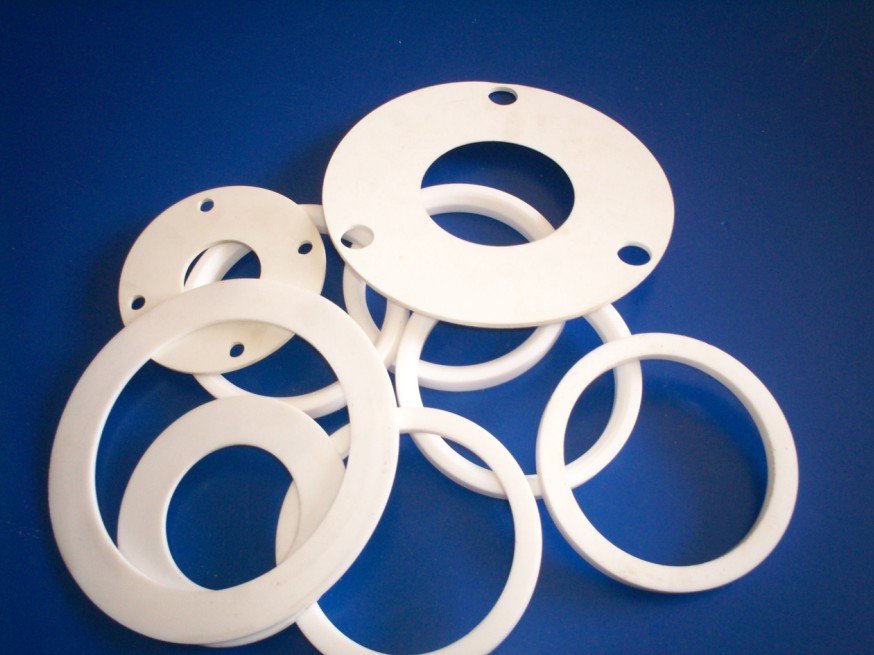
PTFE (polytetrafluoroethylene) gaskets are made from a synthetic fluoropolymer that is chemically resistant, has a low coefficient of friction, and is hydrophobic. PTFE is also known by its brand name, Teflon.
Here are some characteristics of PTFE gaskets:
-
Temperature range
PTFE gaskets can operate in temperatures ranging from -400°F to 500°F. However, at higher temperatures, PTFE decomposes into toxic and corrosive gases.
-
Chemical resistance
PTFE gaskets are resistant to most chemicals and are often used in applications where hygiene and non-contamination are important.
-
Biocompatibility
PTFE is considered biocompatible and physiologically safe, and is available in grades that are approved for use in the food industry and medical technology.
-
Fillers
PTFE gaskets can be reinforced with fillers like carbon or graphite to reduce creep under high pressures and temperatures. However, filled grades are not permitted in applications where they come into direct contact with food because they can discolor or taint foodstuffs.
-
Thickness
The thickness of a PTFE gasket depends on how it is produced. Skiving, which involves cutting a thin layer away from the surface of a cylinder of PTFE, produces a more consistent sheet.