 English
- Home
- About Company
- Our Products
- Brochure
- Gallery
- Contact US
High Pressure Glass Reactor
Graphite Reactor
SS High Pressure Reactor
PTFE Lining High Pressure Reactor
High Pressure Glass Reactor
1
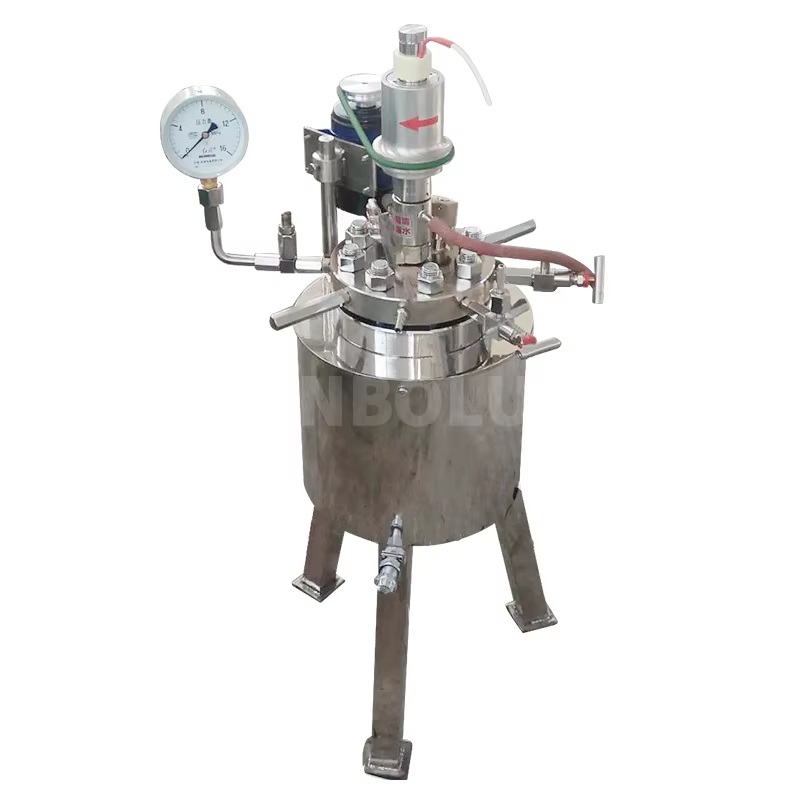
A stainless steel (SS) high-pressure reactor is a specialized vessel designed to conduct chemical reactions under elevated pressure and temperature conditions. These reactors are typically constructed from durable 316 stainless steel or other high-strength alloys, providing excellent corrosion resistance and high-temperature tolerance. They are widely used in various industries, including chemical, pharmaceutical, and petrochemical, where controlled high-pressure and temperature environments are necessary for reactions.
Key Features and Components:
-
Pressure Vessel:
The core component is a robust pressure vessel, typically cylindrical with dished ends, designed to withstand high pressures.
-
Material:
Constructed from stainless steel (e.g., 316-L) for corrosion resistance and durability.
-
Heating/Cooling:
Reactors may include jackets or internal cooling coils to regulate temperature.
-
Stirring Mechanism:
Mechanical agitators (e.g., turbines, impellers) ensure efficient mixing and mass transfer.
-
Sealing:
A reliable sealing mechanism is crucial to prevent leakage under high pressure.
-
Control System:
Reactors often incorporate temperature and pressure sensors, control systems, and safety features.
-
Sampling and Charging Ports:
These allow for addition of reactants and removal of products during the reaction.
Applications:
-
Chemical Synthesis:
High-pressure reactors facilitate a wide range of chemical reactions, including hydrogenation, polymerization, and reactions requiring specific pressure or temperature conditions.
-
Catalysis:
They are used for catalytic reactions where high pressure can enhance reaction rates and yields.
-
Pharmaceutical Production:
High-pressure reactors play a role in synthesizing active pharmaceutical ingredients (APIs) and other drug-related compounds.
-
Petrochemical Industry:
They are employed in various processes, including refining and specialty chemical production.
Advantages of SS High-Pressure Reactors:
-
Enhanced Reaction Rates:
High pressure can accelerate reaction kinetics, leading to faster reaction times and higher product yields.
-
Feasibility of Reactions:
Certain reactions that are not possible under standard conditions can be carried out in high-pressure reactors.
-
Control and Safety:
These reactors offer precise control over reaction parameters, ensuring safety and reproducibility.
-
Durability and Corrosion Resistance:
Stainless steel construction provides long-term reliability and resistance to harsh chemical environments.